

The Derrida–Searle dispute over language emerged from Jacques Derrida’s engagement with J. L. Austin’s account of speech acts. Austin challenged the familiar idea that language primarily describes reality through statements that are either true or false. Utterances can also perform actions: promising, naming, requesting, apologising, sentencing and so forth.
Derrida welcomes this move, but questions Austin’s tendency to exclude theatrical speech, quotation, jokes and other supposedly ‘parasitic’ cases from the central account. A sign, Derrida argues, must be capable of being repeated outside its originating context. Its capacity to function depends on the iterability that prevents its meaning from remaining under the complete control of its speaker.
John Searle resists much of this, defending a more intentional and rule-governed conception of linguistic communication. The resulting exchange became emblematic of the analytic–continental divide, partly because each side seemed increasingly persuaded that the other had failed to understand the problem. I’ve long been as suspect of this rivalry as I am of political divides. Philosophy occasionally demonstrates the insufficiency of language with a dedication approaching performance art.
There’s something persuasive in Derrida’s argument. It’s true that an utterance can be quoted, misheard, parodied, repeated after its speaker has died or transplanted into circumstances never imagined at its origin, but no speaker retains permanent semantic custody over what has been said. Although intention matters, it can’t exhaustively govern uptake.
The theoretical openness of an utterance doesn’t tell us how consequential that openness will be in practice. Interpretive possibilities may remain indefinitely available, but many contract quickly enough for the purposes of ordinary action.
Passing salt
Consider this quotidien request or demand:
Pass the salt.
There are all manner of philosophical difficulties available here: What is salt? Does it refer to sodium chloride, sodium citrate, a salt cellar, a shaker, a sachet, a dietary substitute or the condiment as a functional category? What constitutes passing? Must the object move directly from one hand to another, or may it be placed within reach? Who is the intended recipient? Does the speaker possess the authority to issue the request? Is the utterance sincere, ironic, theatrical or quoted? Thanks for all the fish.
Let’s take inventory:
As Derrida’s deferral notes, one may continue indefinitely.
Wittgenstein’s family resemblances haven’t been gathered into a final essence.
Nietzsche’s conceptual metaphors haven’t suddenly become transparent windows onto reality.
Meaning needn’t be made final. It only needs to become determinate enough for the relevant purpose.
This doesn’t mean that the philosophical complications are false. What it means is that their practical effect is negligible within a sufficiently constrained environment. The table, the meal, the visible shaker, the speaker’s gaze, the listener’s bodily orientation, and the familiar conventions of dining rapidly narrow the range of live interpretations. Meaning needn’t be made final. It only needs to become determinate enough for the relevant purpose.
The act might be accomplished without language at all. A glance towards the shaker, an extended hand, or a slight movement of the head could perform substantially the same function. In this setting, language doesn’t independently construct the request. It provides a compact cue within an already organised field of perception, convention and anticipated action. In this way, one may consider ‘pass the salt’ to constitute a pragmatic alias.
In computing, an alias is a short command that invokes a larger procedure. Likewise, the utterance doesn’t contain everything required to fulfil the request. It merely activates a socially rehearsed routine whose greater part exists outside the words themselves.
Picture this
Imagine a robot receiving the instruction. Its internal process might resemble the following:
Identify the utterance as a request.
Identify the speaker as the probable recipient.
Resolve ‘salt’ to an object in the immediate environment.
Rank candidate objects by visual, spatial and contextual salience.
Determine whether the object is safely graspable.
Plan a route between the object and the recipient.
Grasp the object without spilling its contents.
Move it towards the recipient.
Present or place it in an accessible position.
Determine whether transfer has been completed.
Human beings ordinarily resolve such matters without noticing that they have done so. The robot merely exposes the hidden procedural stack.
Even this comic reconstruction omits several possibilities. The shaker may be empty. It may already be within the speaker’s reach. The speaker may be addressing someone else. The object may contain sugar. The phrase may be spoken by an actor on a stage. The robot may have been instructed not to provide salt for medical reasons. Human beings ordinarily resolve such matters without noticing that they have done so. The robot merely exposes the hidden procedural stack.
Dropping names
Austin helps us to see that the utterance is an act rather than a description. It requests something and depends upon uptake for its success. Searle helps explain its intentional and conventional structure: the speaker intends the listener to recognise the request and respond accordingly. Derrida reminds us that the words remain detachable from this occasion and therefore cannot be permanently secured by it. Wittgenstein places their meaning within the shared practice in which they are used. Nietzsche reminds us that categories such as salt, object and passing are inherited compressions rather than innocent copies of the world.
Barthes adds a related complication. In The Death of the Author, he resists the idea that a text’s meaning can be closed by recovering what its author supposedly intended. Once words circulate, their producer cannot supervise every context into which they will wander or decree a final interpretation. The reader is not merely a receptacle into which authorial meaning is poured.
Yet the dinner table also marks a limit to this argument. The speaker of ‘Pass the salt’ is not altogether dead, however much this might improve certain dinner parties. Identifying who spoke, what they appear to want and to whom the request was directed remains part of the procedure. Speaker intention can’t exhaust meaning, but neither is it merely ornamental. The speaker loses sovereign control without becoming irrelevant.
Good enough for Pinker
Steven Pinker enters from a different direction. He was not a party to the Derrida–Searle dispute, and his account of language does not establish that words transmit perfectly determinate meanings. His larger concern is with language as an evolved cognitive capacity: a remarkably productive human system acquired with little formal instruction and used to coordinate social life with considerable reliability.
From that perspective, the ordinary-world evidence matters. Whatever structural instability remains within ‘Pass the salt’, human beings generally interpret such requests well enough. They need not reconstruct identical concepts, intentions, phenomenologies or inferential histories. They need only coordinate successfully within the tolerance band of the exchange. The salt arrives, and any residual semantic difference is ordinarily a rounding error.
Pinker therefore deserves a qualified ordinary-world victory. The philosopher may demonstrate that interpretation is never finally closed; the cognitive scientist may answer that final closure was never required. A communicative system need not reproduce meaning perfectly in order to coordinate behaviour reliably.
But Pinker’s victory may belong less exclusively to language than it first appears. ‘Pass the salt’ succeeds because language rides upon a considerable body of non-linguistic infrastructure. The visible world has already eliminated most plausible alternatives. Social convention supplies the routine. Embodiment supplies the available movements. Gaze and salience identify the likely object. The utterance merely selects and activates them.
Language insufficiency
Language works here not because it provides a complete representation, but because very little remains for it to specify.
This distinction matters. One might say that all linguistic communication is structurally lossy. No utterance reproduces the speaker’s entire intention, context or conceptual apparatus within the listener. But insufficiency becomes significant only when the loss exceeds the pragmatic tolerance of the exchange.
For an ordinary request involving a familiar object, the tolerance band is broad and the success condition obvious. Either the salt is passed or it is not. The act is observable, rapidly repairable and largely free of ideological stakes. The unresolved semantic residue can be discarded without consequence.
The same syntax becomes rather less impressive when the object of the command is not sitting beside the pepper:
Deliver justice.
Protect freedom.
Respect dignity.
Ensure fairness.
These too resemble procedural calls, but no shared implementation sits behind them. The relevant objects are not directly visible. The available actions are numerous. The success conditions are contested. Different participants load incompatible political, moral and institutional libraries whilst continuing to behave as though they have entered the same command.
In the terminology of A Language Insufficiency Hypothesis, Invariants work not because their meanings achieve metaphysical closure, but because their surrounding constraint environments allow interpretation to contract rapidly within an acceptable error tolerance. Contestables and Fluids don’t enjoy the same environmental assistance. Their unresolved differences aren’t simple rounding errors; they quite literally constitute the problem itself.
Why can’t we all just get along?
This offers a useful way to mediate between Derrida and Searle:
Derrida is right that iterability prevents complete contextual or intentional closure.
Searle is right that ordinary speech acts nevertheless function through recognised intentions and conventions.
Pinker is right that this is generally enough for human purposes.
Barthes is right that the producer cannot retain final jurisdiction over every subsequent reading.
None of these claims requires denying the others.
The missing question is scalar:
At what point does structural openness cease to be inconsequential and begin to alter the outcome?
‘Pass the salt’ remains open in theory but contracts pragmatically into a narrow range of workable interpretations. ‘Deliver justice’ remains open in theory and practice. More language may clarify some aspects, but it may also reveal that the participants were never invoking the same procedure.
The humble salt shaker therefore offers a useful corrective to both linguistic optimism and philosophical melodrama. Language is neither a transparent conduit nor a hopeless labyrinth. In ordinary life, it often functions as an efficient alias for routines already stabilised by the world, the body and shared practice. The sentence doesn’t perform all the work, but it does know where the work is stored. In effect, language works beautifully when the world has already done most of the explaining.
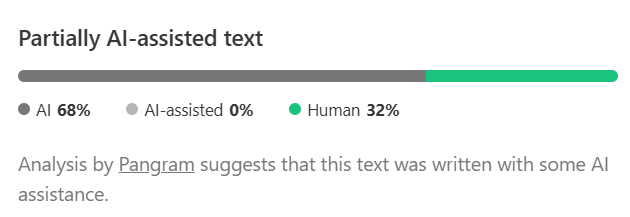
This content was produced by Bry Willis, a philosopher with a focus on language. He shares content here on Substack as well as on his Philosophics Blog. Bry uses various LLMs in his production workflow at all stages, from ideation to production, as well as for the production of ancillary content – audio and video summaries, images, PDFs, and possibly other media.
You can also find him on various social media platforms:
For more information, check out my About Me page
i think this is one of your better ones, I dont' like Pinker sneaking across the line like that from such a late start, but then I haven't met the others