The Problem with Democracy
Consent, Coercion, and the Ballot Box as Civic Incense

I engaged in a dialogue over why I don’t support democracy. Some of my reservations are already documented in my Anti-Enlightenment Project. Others have been captured in my unpublished book, which I am not yet happy with. Nonetheless, ChatGPT has access to all of my manuscripts, published or otherwise, so I’ve enlisted it to render my dissents. Given this output, it looks longer and more robust than I might have done myself, though I’ve edited it slightly. Because of this, I’ve also asked it for a tl;dr tickbox version, which I’ve appended to the end, so feel free to scroll down to cut to the chase.
Even after all of this, ChatGPT still missed some fundamental objections, so I’ll lead with them. If you want something done, do it yourself, eh?
Some Setup
Here’s what ChatGPT missed, but let’s begin with a position statement to head off uncharitable readings.
I believe that everyone in a system should enjoy the same legal protections under the law, so as not to be treated unfairly, whether by privilege or disparagement. No one should be subjected to arbitrary or capricious treatment.
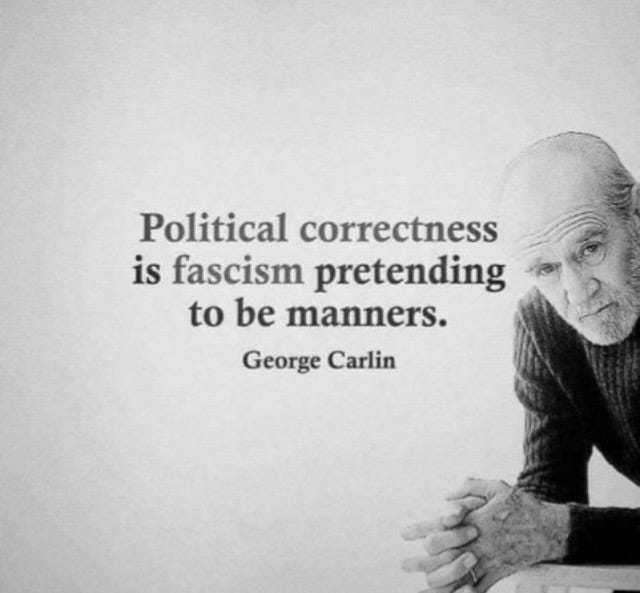
As evidenced by history, nothing is inalienable, nor is anything self-evident. I don’t believe in rights. More specifically, I believe that rights are privileges that shouldn’t be reified into rights. George Carlin performed a nice skit to showcase this point.
The average adult in the United States has an IQ of 97. I don’t personally believe that IQ is a very good measure of general intelligence, but it is somewhat directionally correct. I favour theories of multiple intelligences, but it’s not helpful to promote means testing and allow an idiot savant pianist or an athletic genius who can’t tie his own shoelaces to fully participate in self-governance. If we continue on the IQ trail, I feel an IQ of 116 or above should be necessary to vote. This is one standard deviation above the mean of 100. This may not have much effect, but it could reduce noise in the system. It won’t eliminate low-information participants.
Apart from IQ concerns and as documented by the likes of Dan Ariely and other behavioural economists and cognitive scientists, humans are not particularly rational or reasonable, two claims underlying democracy and the Enlightenment more generally. The rational agent was relieved of duty. Humans are predictably irrational.
Regarding agents, humans are not fully autonomous; they come into the game with cognitive biases and limitations, and these are easily manipulated. Not a good look.
Anyway, enough of the setup. Not only are individuals shaky foundational elements, aggregating them makes matters worse, not better. Decisions become less optimal and more mediocre. I’ll bridge the main course with a quote misattributed to Winston Churchill, who is also famous for another quote. Let’s see both of them in turn.
“The best argument against democracy is a five-minute conversation with the average voter.” — not Winston Churchill
It has been said that democracy is the worst form of Government except for all those other forms that have been tried from time to time. — Winston Churchill
This second quote is risibly specious, but I’ll drag it out into the sunlight anyway.
Enough of the preamble. Let’s eat. Don’t forget to say ‘Grace’.
The Main Event
Democracy enjoys an almost theological status in modern political discourse. It’s not merely treated as a system of government, but as a moral solvent: whatever passes through its procedures is presumed, somehow, to emerge legitimate. A policy may be foolish, cruel, incoherent, or destructive, but if it’s been produced by the right institutional sequence, the stain is laundered. The people have spoken. The deontic laundering ritual has been observed. The incense has burned, and my problem with democracy begins here.
I won’t begin with the easy claim that democracy is simply “better” than monarchy, theocracy, fascism, oligarchy, or any other rival arrangement in the museum of human political bad ideas. Let’s not drag Churchill’s bloated corpse into the fray. That comparison is usually less an argument than a mood with footnotes. How would it be better, and better according to what measure? Popularity? Stability? Individual liberty? Equality? Administrative competence? Reduced cruelty? The emotional satisfaction of believing one has participated?
These regimes are not obviously commensurable along a single scale. They arise from different grammars of authority. Monarchy sanctifies lineage. Theocracy sanctifies divine command. Fascism sanctifies unity, force, and mythic destiny. Oligarchy sanctifies possession and control. Democracy sanctifies participation and the fiction of collective self-rule. To compare them requires a prior evaluative frame, and that frame is never neutral. It is smuggled in through rhetoric, historical trauma, moral disgust, and whatever civilisation is currently congratulating itself for having outgrown.
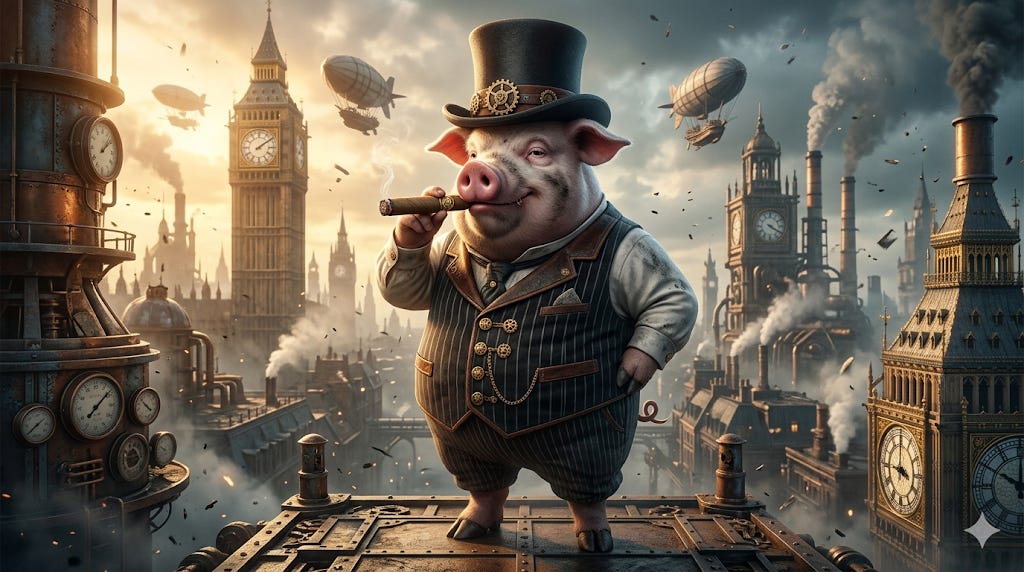
So the question isn’t whether democracy wins a beauty contest against more openly grotesque systems. A pig in a waistcoat is still a pig, however poorly dressed the other animals may be. The question is what democracy claims to solve, and whether it actually solves it.
The problem is the pedestal.
Democracy is often praised as though it solves the problem of political consent. It does no such thing. It manages the problem, obscures the problem, distributes the problem, and periodically invites citizens to participate in the machinery that will later be described as their will. But the underlying difficulty remains: how does a political order bind people who do not meaningfully consent to its outcomes?
Voting is the usual answer. It’s also inadequate.
A vote is not consent in any robust sense. It is a constrained gesture within a pre-existing institutional architecture. The citizen doesn’t choose the rules of the game, the boundaries of the polity, the available options, the inherited debts, the constitutional grammar, the administrative machinery, or the coercive apparatus that enforces the result. The citizen is handed a ballot and invited to select from a menu prepared elsewhere. If their side loses, they are told they consented to the process. If they abstain, their silence is folded into the same order. If they object too strongly, the state remembers that beneath the ballot box there is still a police force. This is not a scandal in the childish sense. All political orders involve coercion. The scandal is that democracy so often pretends otherwise.
The democratic story depends upon a peculiar transformation: participation becomes consent, consent becomes legitimacy, legitimacy becomes obedience. The chain is rarely examined because it is taught early, repeated often, and wrapped in civic sentiment until it feels like common sense. We are trained to experience democracy not merely as a mechanism, but as identity. To doubt it is to sound immature, dangerous, elitist, authoritarian, or insufficiently grateful.
This is where the folly of John Locke and social contracts rule the roost, and Heidegger’s Geworfenheit pays a visit. Speaking for myself, I didn’t choose the system or the rules. In the United States, I am one of approximately 350MM people – let’s say some 200MM eligible voters. That allocates to me a voice of a sliver of 1/200MM. One has better odds of winning at Lotto. Moreover, the game is rigged, and advantages accrue to the house. No thanks.
That reaction is part of the machinery.
Democracy requires an enormous amount of hegemonic energy to remain emotionally plausible. From childhood, citizens are taught that voting is voice, that representation is presence, that national belonging is voluntary, that legitimacy descends through procedure, and that “we” govern ourselves. This “we” does extraordinary work. It converts millions of strangers with incompatible interests, moral grammars, material positions, histories, and imagined futures into a single fictional agent: the people.
But there is no ‘people’ in that sense.
There are populations. There are factions. There are classes, regions, parties, institutions, donors, courts, bureaucracies, media systems, lobbies, police forces, inherited myths, and exhausted citizens who would rather not have to develop a theory of legitimacy before breakfast. There are temporary coalitions and manufactured majorities. There are people whose interests are legible to power and people whose injuries do not count. There are winners who call the outcome democracy and losers who are expected to call it legitimate. This is even more evident in light of recent developments in the US. The game used to seem more gentlemanly.
Democracy doesn’t abolish domination. It proceduralises domination and teaches citizens to call the result consent.
One of the deepest problems here is scale.
Humans are, by and large, prosocial animals. We seek belonging, recognition, reciprocity, attachment, and group membership. That much isn’t the problem. The problem is that human prosociality is not abstract, universal, or infinitely extensible. It’s local, relational, identity-bound, and dependent on perceived commonality. We aren’t born as rational citizens of an imagined universal republic. Rather, we’re born as embodied, partial, anxious, imitative, story-soaked creatures who need groups long before we can explain why.
At small scales, even relatively homogeneous groups struggle. Families fracture. Marriages collapse. Committees become petty theatres of resentment. Churches split over doctrine. Academic departments feud over titles, parking, and the metaphysics of biscuits. Activist groups devour themselves over procedure, tone, purity, and who used the wrong adjective in 2014. These aren’t failures of democracy alone. They’re failures of human coordination under constraint.
Democracy takes that fragile interpersonal machinery and asks it to scale across millions of strangers with divergent interests, incompatible moral grammars, unequal resources, different histories, different threat perceptions, and different imagined futures. The miracle isn’t that democracy fails. It’s more that anyone expected it to work without massive symbolic reinforcement.
Large-scale democracy can’t rely on genuine mutual recognition, because most citizens won’t ever encounter one another except as abstractions: census categories, voting blocs, taxpayers, migrants, elites, workers, criminals, patriots, parasites, victims, consumers, enemies. The polity must therefore manufacture belonging through national myth, civic education, media ritual, institutional ceremony, flags, anthems, dead soldiers, founding fathers, sacred documents, school assemblies, and all the little sentimental props by which power learns to wear a cardigan.
The larger and more heterogeneous the population becomes, the more effort is required to sustain the appearance of common purpose. Democracy doesn’t scale naturally. It scales through narrative, administration, coercion, propaganda, and identity formation.
Democracy’s great scaling error is that it mistakes local prosociality for universal civic solidarity. The small group works through familiarity, reputation, repeated interaction, shared risk, and thick norms. The nation-state works through abstraction, myth, discipline, bureaucracy, and force. If the first is social life, the second is social life rendered administratively legible and then mistaken for solidarity.
This becomes especially visible under pluralism. Democracy is often defended as the proper system for a diverse society, but diversity is precisely where the theory begins to creak. In a genuinely heterogeneous population, people do not merely disagree about means. They disagree about ends. They disagree about what counts as harm, freedom, justice, dignity, authority, corruption, safety, flourishing, and legitimacy. They don’t necessarily inhabit a shared moral world in which compromise is a noble midpoint. Sometimes the midpoint is simply the place where incompatible ontologies are flattened into administrative mush. (Refer to my work on ontological grammar and commitments.)
Compromise has its place. So do mediation and institutional restraint. But compromise is not magic. When ends are incompatible, compromise may mean mediocrity at best, partial disenfranchisement in the middle, and violence at worst. A democratic outcome doesn’t dissolve the losing side’s ontology. It merely overrules it.
Again, this may be necessary. Political life requires decisions. Roads must be built or not built. Wars must be entered or avoided. Taxes must be collected. Borders must be enforced or loosened. Laws must be applied. Institutions can’t remain permanently suspended in exquisite pluralist sensitivity, trembling before every unresolved value conflict, but democracy is not the answer.
Necessity is not consent.
This distinction matters. A state may need to coerce, enforce, or decide. It may even need to bind dissenters to outcomes they reject, but it shouldn’t then pretend that the coercion has been transfigured into freedom because the correct participatory liturgy occurred beforehand.
The problem becomes clearer when compared with personal relationships. Even marriage, with two participants, direct communication, shared history, emotional intimacy, and a recognised exit mechanism, often fails to sustain meaningful consent. Consent barely works cleanly at the smallest social scale. It frays under misunderstanding, asymmetry, fatigue, economic dependency, fear, habit, resentment, and time.
At least marriage has divorce.
Where is the citizen’s divorce from the democratic state?
The standard answer is: leave. Move. Emigrate. People do it all the time.
This answer is less impressive than it sounds. Emigration isn’t a clean opt-out. It requires money, health, legal status, receiving states, employment prospects, family flexibility, language ability, documents, bureaucratic endurance, and geopolitical luck. Nor does it release one from political order as such. It usually means transferring from one jurisdiction to another. The citizen doesn’t escape rule. They change managers.
“Leave if you don’t like it” isn’t an argument for consent. It’s the language of ownership pretending to be liberty.
The more theatrical version of this answer is that one could build walls, sign treaties, establish defences, and declare oneself sovereign. This has the pleasing quality of sounding like a child with a cardboard crown has discovered international law. If opting out requires land, capital, military defensibility, diplomatic recognition, and treaties with existing states, then it isn’t an opt-out available to citizens. It’s statehood in miniature by another route. The proposed escape from power – even from the tyranny of democracy – requires power.
This is not liberal consent. It is admission by infrastructure.
The defender of democracy may say: but you use the roads, the banks, the courts, the currency, the employers, the postal system, the property framework, the police, the contracts, the barista who sells you coffee under health codes and labour rules. Your life depends upon the legal order. Doesn’t that show your ongoing consent? No. It shows dependence.
My use of the aforementioned laundry list – banks, employers, roads, courts, mail, property law, currency, and personal security – doesn’t establish ongoing consent to the political order. It establishes that ordinary life has been routed through a state-backed institutional environment from which meaningful non-participation is nearly impossible. Dependence on infrastructure isn’t consent to sovereignty. It’s evidence of enclosure.
If a person is born into a system, educated through its categories, made economically dependent upon its legal and monetary structures, and then told that using those structures proves consent, the concept of consent has become circular. The system creates the conditions of dependence and then treats dependence as ratification.
You use the cage’s plumbing; therefore you consent to the cage.
That is not a theory of liberal consent. It’s infrastructural capture wearing a top hat. Blast that damn pig.
Secession exposes the same problem at collective scale. When a region attempts to withdraw from a democratic state, the state does not usually respond, “Consent withdrawn; best wishes with the stationery.” It asserts sovereignty, continuity, and territorial integrity. It may do so for compelling reasons. The American Civil War is the obvious case, and let me be tediously clear for those determined to misunderstand: I have no sympathy for the Confederacy or the slaveholding order it fought to preserve. The point is structural, not romantic. When withdrawal threatens the state, the state enforces membership.
Freedom comes in degrees.
This doesn’t make democracy worthless. It makes democracy human: compromised, coercive, partial, historically contingent, and dependent on fictions it can’t fully justify. The trouble begins when democracy is elevated from a political technology into a moral sacrament.
Much of this sanctification descends from Enlightenment assumptions I don’t happen to share. Democracy inherits the rational citizen, the coherent self, the aggregable preference, the transparent act of consent, the possibility of public reason, and the fantasy that procedure can redeem domination. These ideas may be useful, administratively necessary, and preferable to the older metaphysics of king, priest, and bloodline. But useful fictions are still fictions.
The rational citizen isn’t waiting beneath the noise of politics, ready to emerge when given a leaflet and a polling station. Citizens are embodied, situated, primed, frightened, proud, bored, distracted, resentful, loyal, confused, exhausted, and narratively captured. They don’t arrive at politics as clean units of deliberative reason. They arrive as products of family, class, media, language, trauma, education, geography, myth, appetite, and whatever nonsense they absorbed before they were old enough to defend themselves.
Democracy asks these creatures to generate legitimacy at scale.
Then it looks surprised when the result is ugly.
Nor does the distinction between individual and group save the theory. It usually worsens it. The individual is told they consent because the group has procedures. The group is treated as legitimate because individuals are said to participate. Dissent is then absorbed into the same machinery as evidence that the machinery remains open. The individual disappears into the group when legitimacy is needed; the group disappears into the individual when responsibility must be assigned.
This is democratic double bookkeeping.
The defender may say that democracy depends on social cohesion, buy-in, and a shared social contract. I agree. But that’s precisely the point. Social cohesion is not liberal consent. Buy-in is not philosophical authorisation. The social contract isn’t signed; it is inherited, taught, enforced, sentimentalised, and retroactively narrated as agreement.
This is nationalistic before it’s liberal. It depends on belonging, identity, habituation, memory, loyalty, and affective attachment to an imagined “we”. Liberalism may provide the vocabulary, but nationalism supplies the glue. The citizen is not merely persuaded. The citizen is formed.
That may stabilise a democracy. It may even be necessary, but we should stop pretending it’s consent in any clean sense.
My claim isn’t that I can stand outside all political order like some sovereign atom in a libertarian fever dream. I can’t. No one can. That’s precisely the point. Liberal democracy speaks as though legitimate rule rests on consent, whilst the actual citizen is born into a territorial, legal, economic, and administrative order; they can’t meaningfully refuse except by costly relocation into another order.
That may be unavoidable or even be preferable to other arrangements, but unavoidable dependence shouldn’t be laundered into consent.
The defender of democracy may reply: what is the alternative? This is always treated as a devastating question, though it is often little more than an evasion wearing a serious coat. To criticise democracy isn’t to owe the world a fully costed replacement regime by Tuesday. Diagnosis isn’t invalidated because the cure is unavailable. If a bridge is structurally unsound, pointing this out is not refuted by asking whether one has personally designed a better bridge in the car park.
Still, the question has force, and alternatives matter. The twentieth century gave us more than enough evidence that anti-democratic fantasies can become slaughterhouses with flags. But that history should make us more honest, not less. Democracy may be the least bad arrangement we’ve found for distributing political power under conditions of conflict. A serious defence, perhaps, but a modest one.
The modest defence says: democracy is a damage-limitation system. It provides mechanisms for contestation, rotation, accountability, peaceful transfer, limited participation, rights protection, institutional correction, and public challenge. It doesn’t embody the general will. It doesn’t make the citizen free in any absolute sense. It doesn’t solve pluralism. It doesn’t even eliminate coercion. It gives coercion manners, paperwork, opposition benches, appeal rights, and occasionally shame. That isn’t nothing, but it’s not a pedestal.
Democracy is performative moral theatre
My objection, then, is not to democracy as a flawed institutional technology. My objection is to democracy as moral theatre. I object to the sanctimonious glow around it, the way it permits modern states to describe compulsion as self-rule and losers as authors of their own defeat. I object to the civic catechism in which voting becomes voice, voice becomes consent, and consent becomes legitimacy.
Democracy isn’t the absence of domination. It’s one historically contingent method for organising domination under conditions where naked rule has become aesthetically embarrassing.
That may still be worth defending. I mean. I wouldn’t defend it, but if we do it, we should do so without the incense. We should defend democracy as scaffolding, not granite; as compromise, not salvation; as maintenance, not redemption. It’s a way of keeping the roof from collapsing whilst the inhabitants continue arguing about whether the house was ever theirs.
And perhaps that is the best case for democracy after all:
Not that it expresses the will of the people.
Not that it makes us free.
Not that it redeems coercion through procedure.
But that, when stripped of its Enlightenment halo, democracy may remain a tolerable machinery for managing disagreement among creatures who can’t agree, can’t leave, can’t scale intimacy, and can’t stop inventing stories about why the cage is actually a covenant.
At this point, the usual objections begin arriving in procession, each wearing the expression of someone who believes they’ve discovered fire. But they haven’t. What they’ve discovered are the standard maintenance scripts by which democracy protects its sanctity.
Thanks for reading! Subscribe for free to receive new posts and support my work.
The tl;dr Tickboxes
A defender of democracy will usually reach for one of several moves.
☐ 1: “What’s the alternative?”
This treats critique as invalid unless accompanied by replacement architecture. But diagnosis is not blueprint. A system can be structurally unstable even if its replacement is unavailable, unclear, or worse.
☐ 2: “Democracy is better than the alternatives.”
Better by what measure? Stability, liberty, prosperity, dignity, equality, affective comfort, violence reduction, participation? The comparison is not neutral. It presupposes the evaluative frame that democracy itself often smuggles in as common sense.
☐ 3: “You consent by participating.”
Participation inside a compulsory architecture is not robust consent. Voting, banking, working, paying tax, using roads, or receiving mail shows embeddedness in a legal order, not free authorisation of that order.
☐ 4: “You can opt out by leaving.”
Emigration is not political divorce. It is costly, conditional, bureaucratically mediated, and usually only transfers the person from one sovereign order to another. Changing cages is not the same as escaping captivity, though the wallpaper may improve.
☐ 5: “You benefit from the system.”
Benefit does not equal consent. Dependence does not equal endorsement. A person born into an infrastructure cannot be said to consent merely because survival requires using it.
☐ 6: “The social contract requires buy-in.”
Quite. But buy-in is not liberal consent. It is social cohesion, habituation, civic formation, national myth, and identity-production. Useful, perhaps necessary, but not philosophically clean.
☐ 7: “You are conflating individual and group.”
No. The democratic argument itself slides between individual and group whenever convenient. Individuals are invoked to legitimise the group; the group is invoked to bind individuals. That is the double bookkeeping.
☐ 8: “Democracy channels disagreement peacefully.”
Sometimes. And that is one of its genuine virtues. But channelling conflict is not resolving it. Nor does peace prove consent. It may only prove that coercion has been sufficiently proceduralised.
Enfin
So, that’s that. I tried to edit out a lot of ChatGPT’s wittering and system fawning, but I left in enough saccharine to note the authorship. It’s especially evident at the end when it goes into defence mode. I’ll throw the bot a bone.
Cheers.
Post Script
Claude informs me to edit it further and remove references to ChatGPT, appreciating the candour but advising that it weakens my position. Even Claude notices the bloat. It also cautions me against derailing the statement with a politically volatile IQ stance. Speaking of George Carlin, I’ve been warned not to invoke a comedian in a philosophical argument, as it will invite ad hominem. Se be it.